
2024-2026
Bringing psychological research to broader audiences
beyond psych101
Most psychological content online falls into one of two categories: crisis-oriented (disorders, "when to seek help"), or academic trivia (textbook theories, diagnostic criteria).
Both reinforce the same underlying assumption: psychology, and therapy by extension, is only relevant when something is wrong.
This assumption is a significant driver of delayed help-seeking. People wait until they are in crisis, even though therapy is often most effective earlier, applied to the everyday confusion and decision-making everyone experiences. For a clinic specifically, this framing also narrows the audience, as content built only for crisis moments gives someone no reason to engage before they think they need to.
the approach
Rather than starting from psychological theory and finding examples, I begin drafting content from experiences, and work backwards to the mechanism behind it.
The goal is not to simplify theory for its own sake, it is to give people language for something they have already felt, so psychological insight (and therapy) registers as relevant to ordinary life, not just moments of crisis.
think with me: GE2025
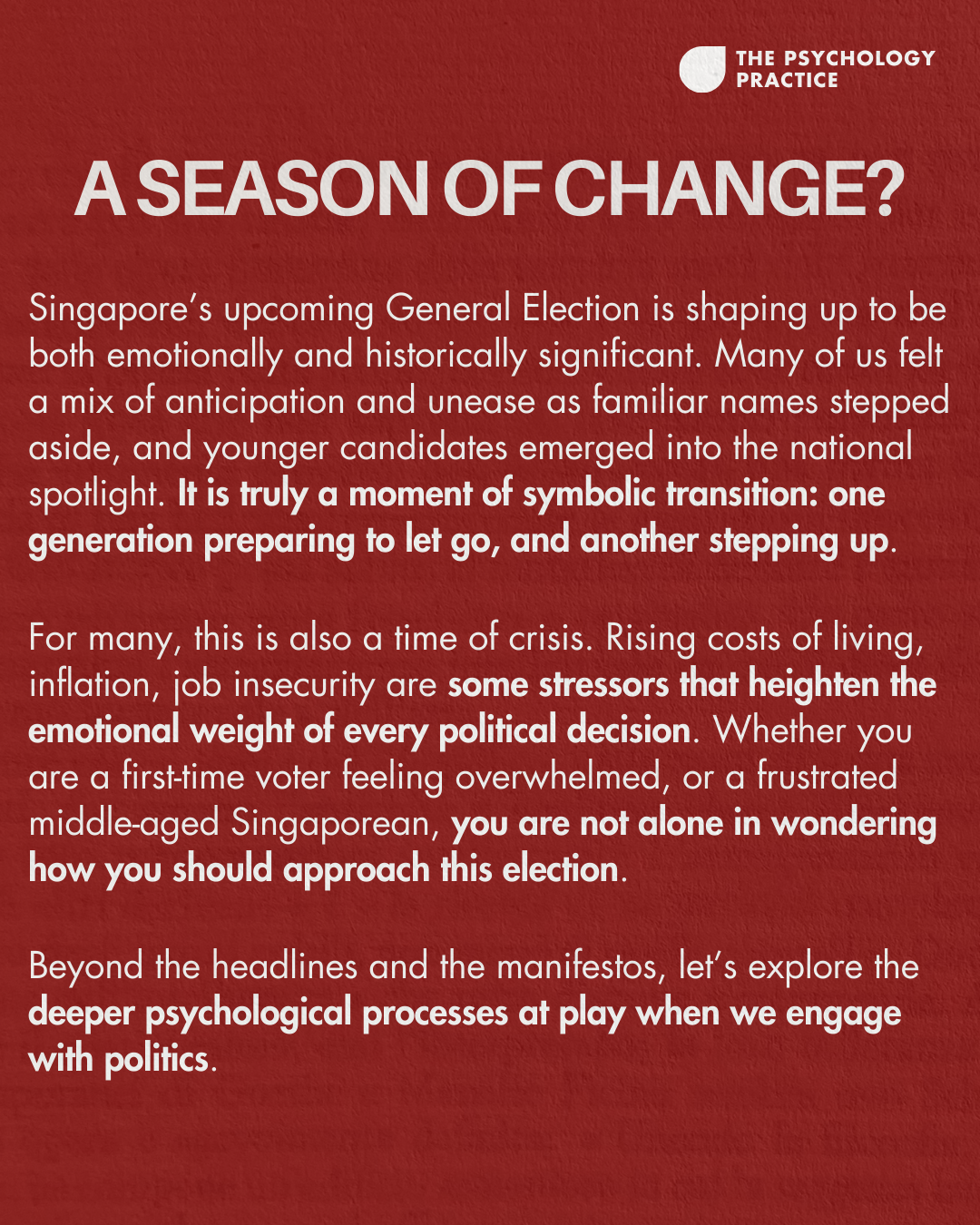
Singapore's 2025 General Election left many people feeling oddly on edge. However, a routine and institutionally stable election is not inherently high-stakes, so the unease did not seem to have an obvious source.
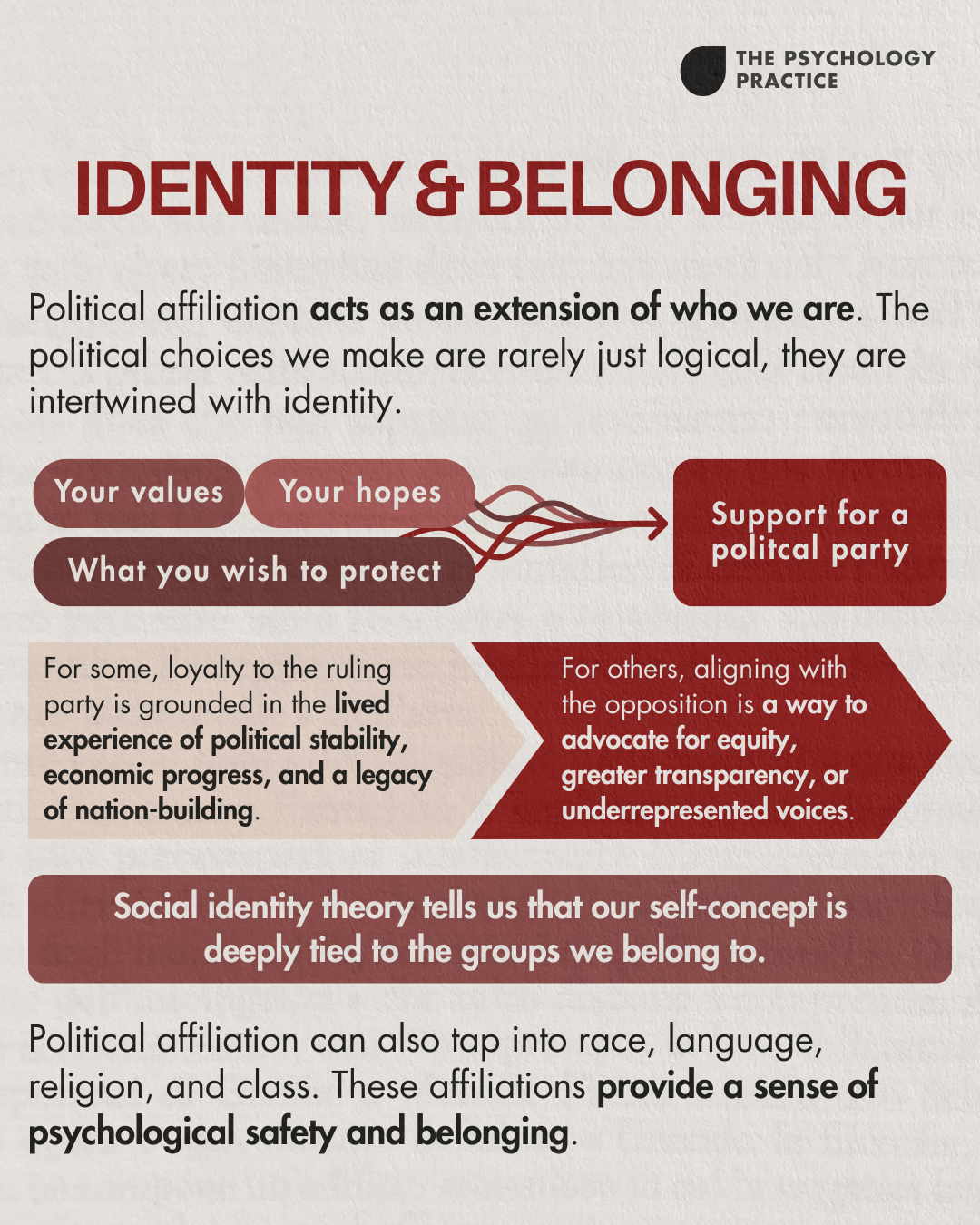
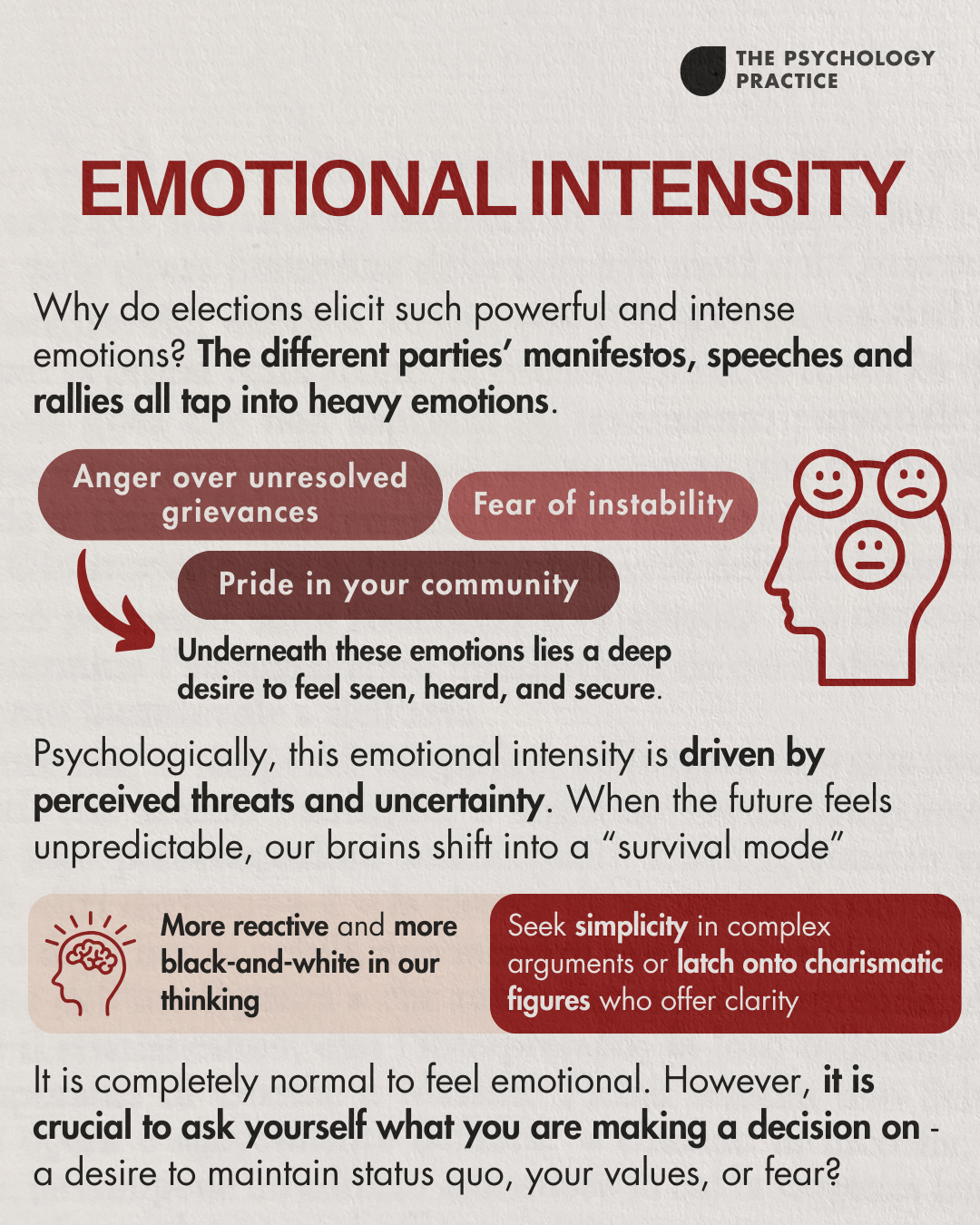
Each carousel slide isolated one psychological mechanism sitting underneath it. The aim was to give this feeling an explanation and a vocabulary.
Every draft is reviewed by the practice's psychologists before publishing, checked for clinical accuracy and ethical soundness. Accessibility is never allowed to come at the cost of correctness.
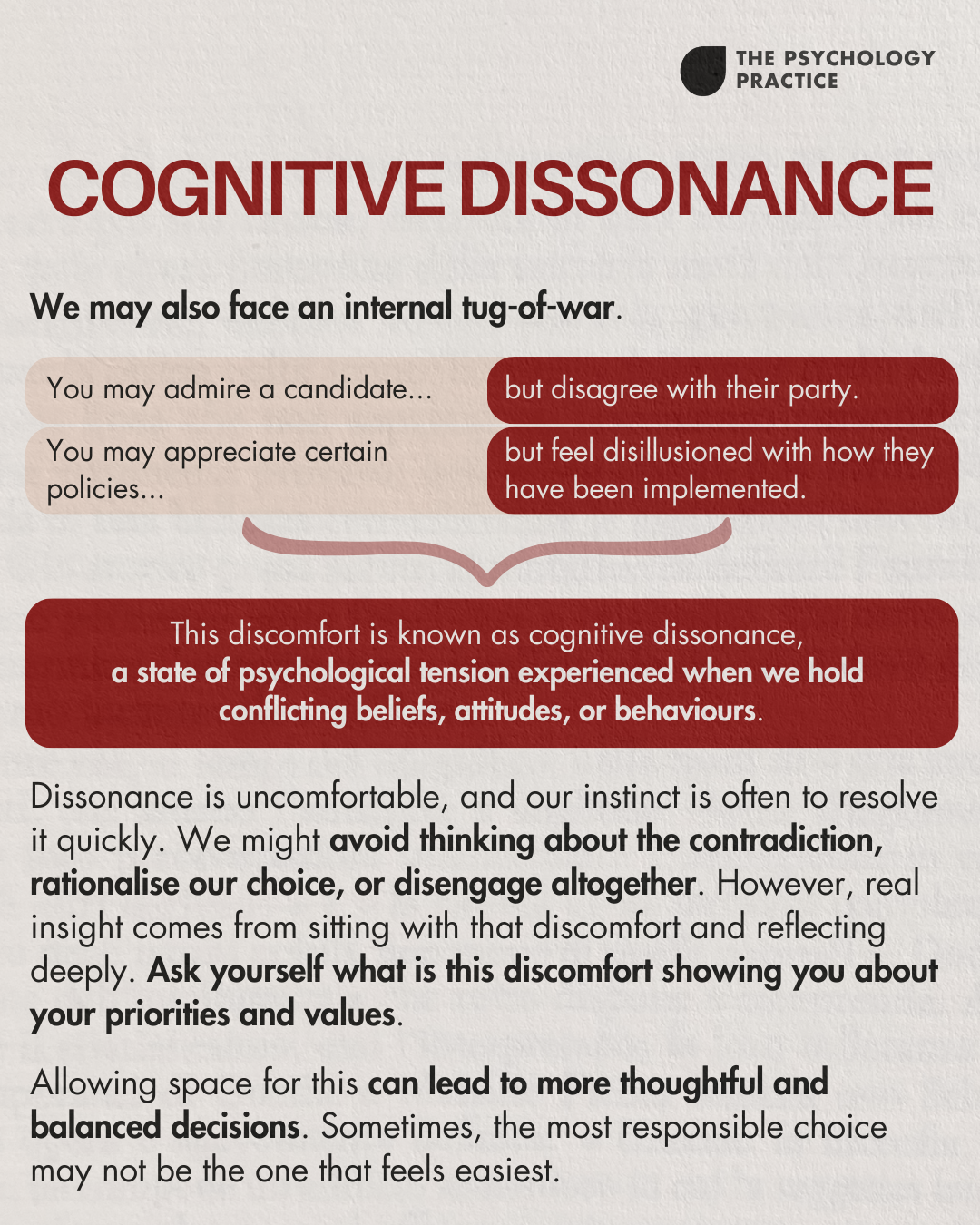
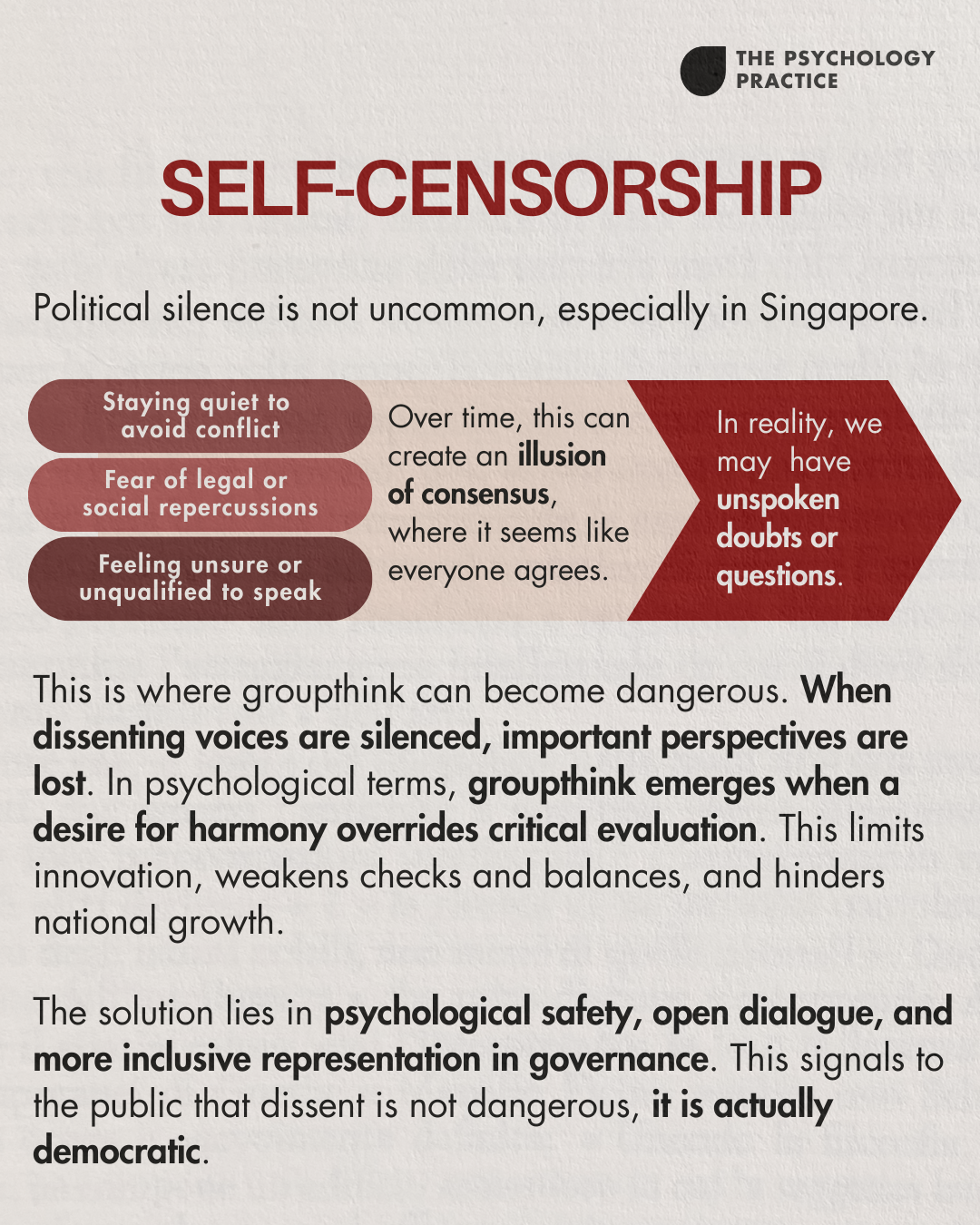
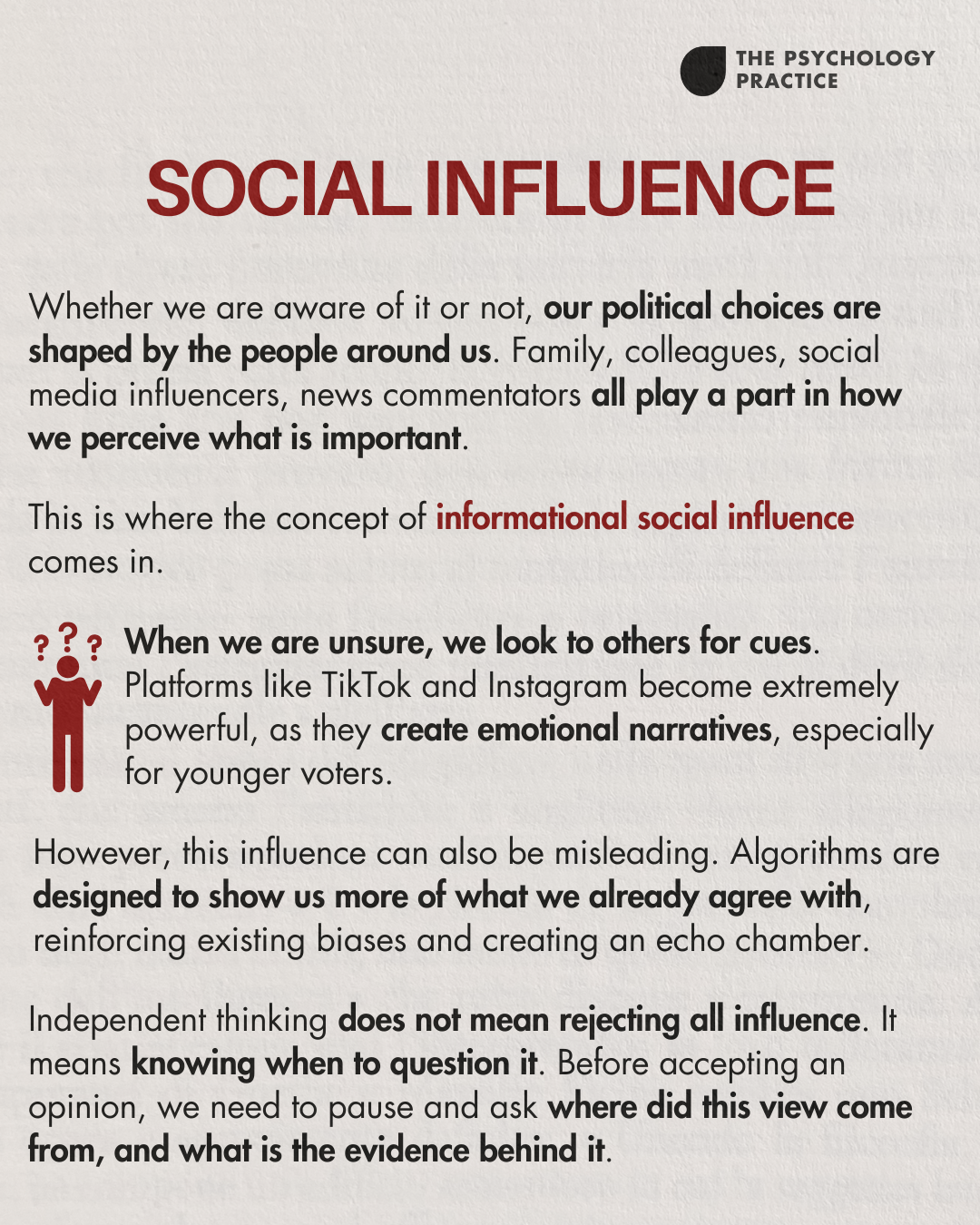
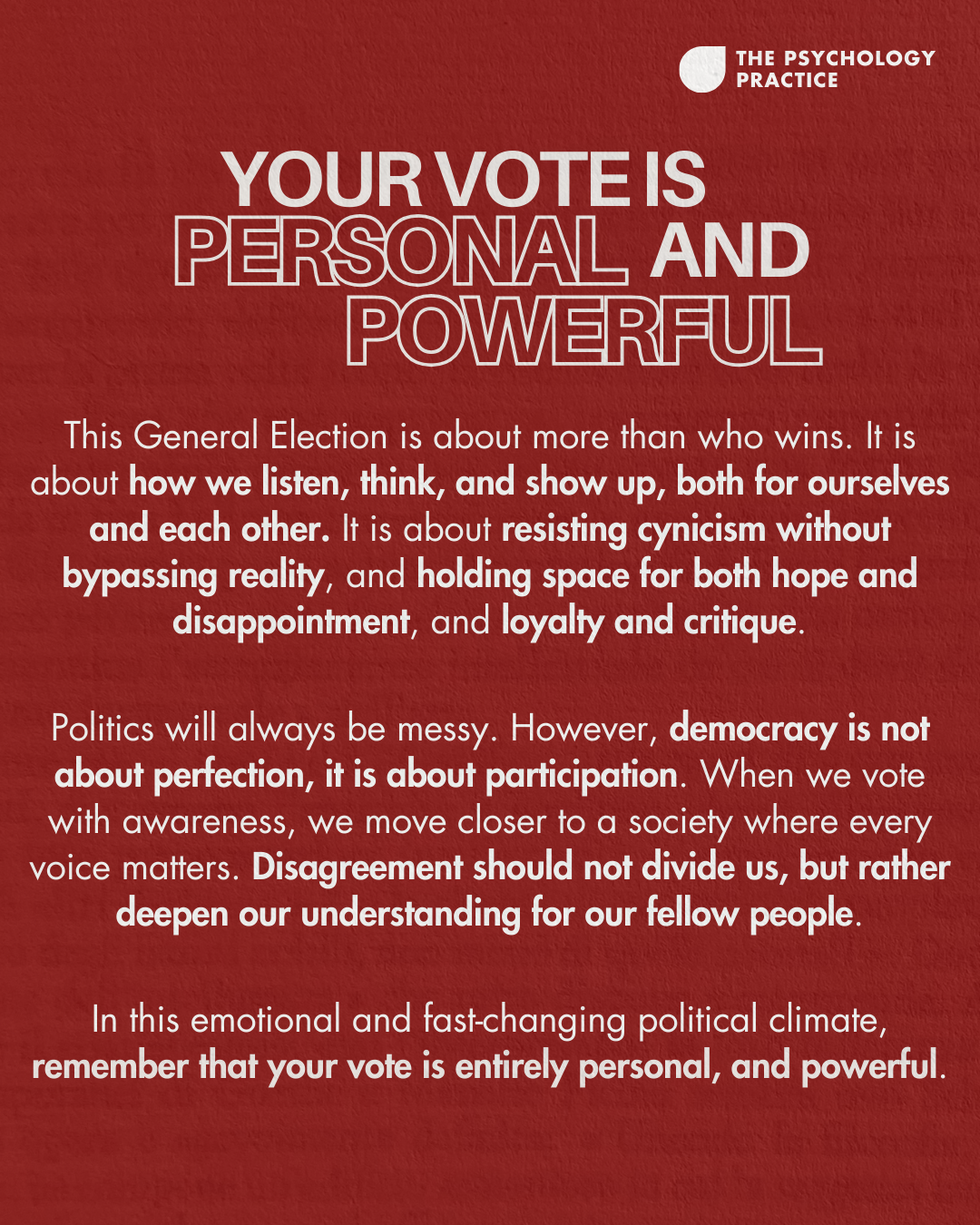
Across the practice's channels, this content strategy has driven meaningful reach (~10,000–20,000 monthly on Instagram and Facebook) and standout engagement peaks (up to 8.2%* on LinkedIn, alongside 27.5% follower growth on that platform. View TPP’s media kit ↗ for more insights.
Read together, this is evidence that reframing psychology around everyday experience, not just crisis, resonates with the intended audience.
*Methodology note: engagement rate here is calculated against reach, not follower count. This is not directly comparable to industry benchmarks calculated on a follower-count basis. The LinkedIn figure above is compared against other reach-based readings for context, not cited as a like-for-like industry percentile.